
by Rich DuBose
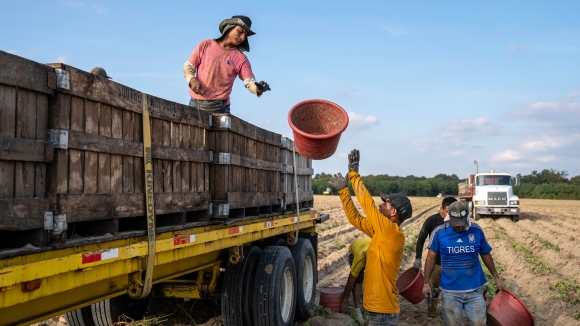
If you think today’s racial inequities, homelessness and demographics are unique to our times, you would be mistaken. This was written in 1936.
“In California we find a curious attitude toward a group that makes our agriculture successful. The migrates are needed, and they are hated. Arriving in a district they find the dislike always meted out by the resident for the foreigner, the outlander. This hatred of the stranger occurs in the whole range of human history, from the most primitive village form to our most highly organized industrial farming. The migrants are hated for the following reasons, that they are ignorant and dirty people, that they are carriers of disease, that they increase the necessity for police and the tax bill for schooling in a community, and that if they are allowed to organize they can, simply by refusing to work, wipe out the season’s crop. They are never received into a community nor into the life of a community. Wanderers in fact, they are never allowed to feel at home in the communities that demand their services.” —The Harvest Gypsies, John Steinbeck, p. 20, 1936.
Early on the migrants were Chinese, Filipinos and Mexican, but as these were ostracized, arrested and deported, they were replaced by populations from Oklahoma, Nebraska and parts of Kansas and Texas, as their lands were destroyed by overuse, natural disasters, and poor land stewardship. So impoverished, white Americans begin to stream into California with very little but the clothes on their backs, broken down vehicles, and hungry stomachs. These white vagabonds became the new migrants who were willing to work for a pittance. Even though they were “dust bowl refugees” from other parts of America, they were still viewed as foreigners who were hated, yet needed.
Without empathy, understanding and intentional grace, Americans will always be goaded by the fear of the stranger and the persons without; fear that they will somehow weasel in and take what is theirs.
I hear God's voice vicariously echoing down through Exodus, Leviticus, Deuteronomy, Malachi, and Matthew, to us today:
“When a stranger sojourns with you in your land, you shall not do him wrong. You shall treat the stranger who sojourns with you as the native among you, and you shall love him as yourself, for you were strangers in the land of Egypt: I am the Lord your God” (Leviticus 19:33-34, ESV).
“You shall not oppress a sojourner. You know the heart of a sojourner, for you were sojourners in the land of Egypt” (Exodus 23:9, ESV).
“Then I will draw near to you for judgment. I will be a swift witness against the sorcerers, against the adulterers, against those who swear falsely, against those who oppress the hired worker in his wages, the widow and the fatherless, against those who thrust aside the sojourner, and do not fear me, says the Lord of hosts” (Malachi 3:5, ESV).
“For I was hungry and you gave me food, I was thirsty and you gave me drink, I was a stranger and you welcomed me…” (Matthew 25:35, ESV).
“Cursed be anyone who perverts the justice due to the sojourner, the fatherless, and the widow” (Deuteronomy 27:19, ESV).
Rich DuBose writes from Northern California | Photo by Mark Stebnicki, with Pexels
On the web at: richdubose.com. All Rights Reserved © 2025. Join me on Blue Sky @spiritrenew.bsky.social.
Scripture quotations are from The ESV® Bible (The Holy Bible, English Standard Version®), © 2001 by Crossway, a publishing ministry of Good News Publishers. Used by permission. All rights reserved.